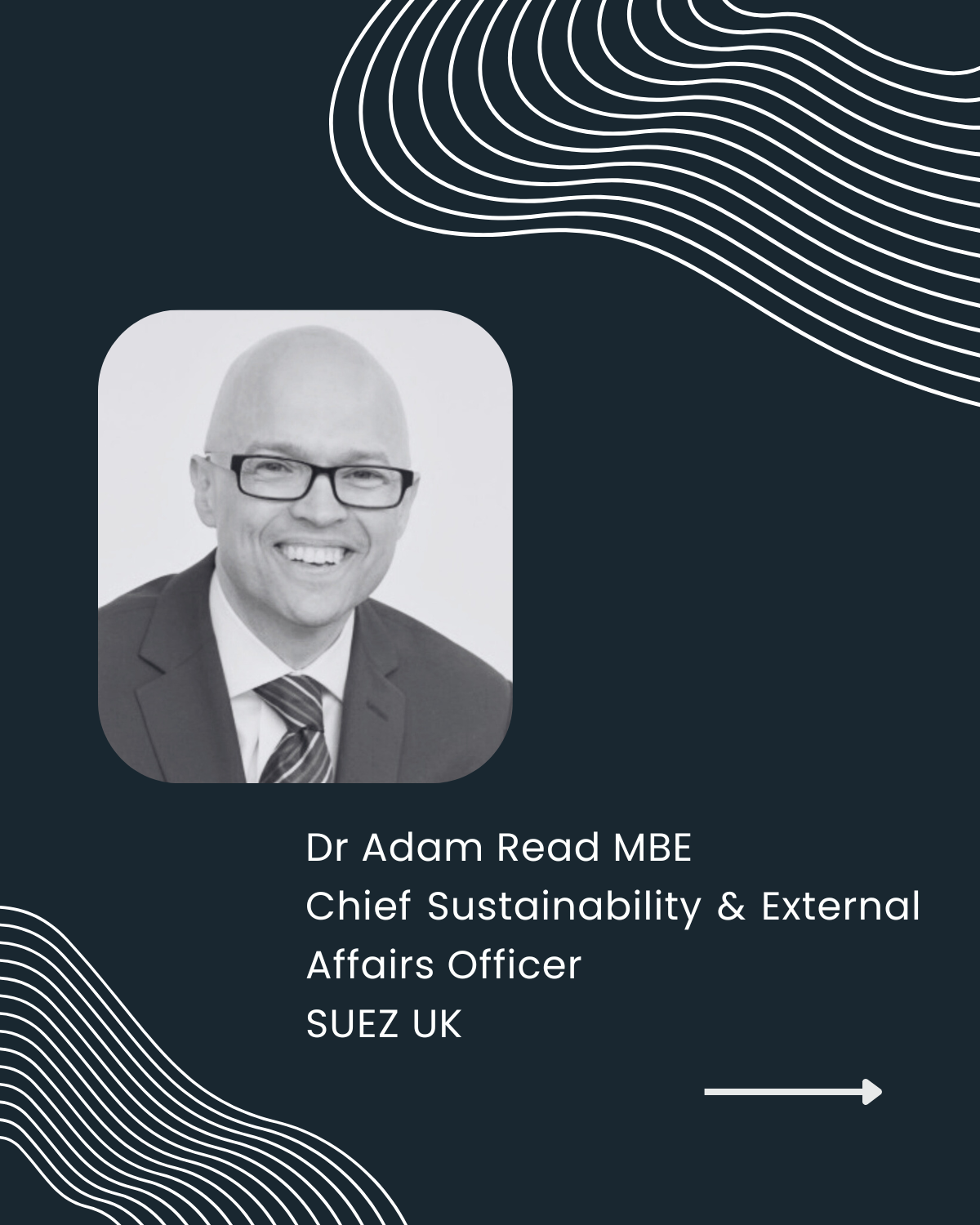
It feels like there’s only one place to start. Your career in sustainability seems to have been intentional from an early age. Can you share how your interests and experiences shaped your decision to pursue this path?
Yes, I grew up in Kingston upon Thames in SW London, not far from Wimbledon Common the spiritual home of the Wombles who have been my guiding light since a very young age – dealing with the litter left by the public on the common, being innovative, responsible and collaborative, all things that seemed to make sense to me as a 10 year old! Plus of course litter duty was the punishment of the day for the cheeky chappie who perhaps said more than he should at times, and I got to see up close and personal how litter patterns related to bin locations and behaviours at lunchtime in particular.
I was destined for a life in waste and my love of geography – a shout out to my grammar school teachers Messrs King, Epstein and Langrish – really helped cement that my interest was in sustainability before it became a real thing and was all about the interaction of society and the environment. A job in recycling seemed to be a great plan after my undergraduate geography degree helped finish my education. At Exeter University, I chose to study applied hydrology, climate science, countryside planning amongst my specialisms and European politics, who knew 30 years later I would specialise in external affairs for a global resource management company!
Picking my final year thesis topic was a pretty easy choice as my summer jobs to that point had been in the waste team at the Royal Borough of Kensington & Chelsea doing all sorts of wonderful stuff (user surveys of public conveniences, licensing of sound systems and food stalls at the Notting Hill Carnival, and recycling data management) but the coffee time chats with the wider waste team opened my eyes to a sector that was ripe for new opportunities and only just getting the kind of policy attention that other sectors had been seeing for a few years already – the Control of Pollution Act was revamped in 1990 and so modern waste management was on a new path! But it was maternity leave cover at the Royal Borough of Kensington & Chelsea that cemented my career choice, 18 months of delivering front line recycling to the homes of the borough twice every week really helped to educate me about service design and delivery, communications, data reporting and wider sector trends and issues, so it became obvious that a PhD thesis was how I was going to understand these mega-trends in more detail and give something to the sector that might help shape future policy and services and so I set out to secure a bursary to support my thesis on ‘waste management policy implementation failure’ which I undertook at Kingston University over a 7 year period as a researcher and then a member of academic staff, where my skill set around education, presentations, workshop facilitation and media was sharpened! The rest you might say is history as global consultancies came head-hunting before the PhD was complete (I finished it nights and weekends that first 6 months in post at ERM) and I spent the next 15 years working for market leading names in consultancy, doing similar things to my time as a PhD researcher, answering customer questions, modelling options, implementing service designs and delivering communication campaigns – and I haven’t looked back!
The last 8 years I have been based with SUEZ in the UK looking after initially external affairs, supporting government on policy reforms and wider sector engagement on behalf of the company and production of our annual thought leadership reports, whilst the last 3 years have seen me take on responsibility for the sustainability team and the communications teams too, linking my passions back together in 1 dream team!
Your role spans sustainability, external affairs, policy influence and industry thought leadership. How do you prioritise where to focus your time and energy when the sector is changing so rapidly?
Thankfully these roles / activities are often very well aligned and so aren’t competing for time and effort, but you are absolutely right about the changing nature of the sector and the increasing speed of that change, plus of course communications are now more immediate than ever before through social media, so getting the balance right is important, and so is having the right expertise around you to help manage a crisis call, deal with a journalist enquiry or to launch a new anti-abuse campaign across our sites, so that I can spend more time on thought leadership and political engagement – my specialist skills.
The key thing is having a clear view of what the future will look like and the roadmap to get there, from which we can develop our thought leadership reports, engage the media with ideas about the changing nature of the sector and the great examples we have of delivering those types of solutions now, and bring these ideas into the policy arena through briefing documents, round tables and meetings with key civil servants, politicians and industry stakeholders. Internal communications is a little different but we are often talking about the same issues but in a way that makes it accessible for our front line staff, helping to translate upcoming policy and what it will mean on the shop floor, reflecting on our award winning sites / facilities and how we are looking to replicate them across the UK, and ensuring everyone knows about key changes in our own policies and protocols – its just recognising the different audiences and routes to engage them.
Sustainability can often be a very separate set of activities working with our champions network (across 300 plus sites) to build awareness of best practice and to support implementation of our 10 core principles, and then gathering data on impact, performance and value that forms the core of our annual sustainability report which showcases the progress being made and the best examples from across our business. But in reality my sustainability team work closely with internal communications to develop case studies to get engagement and to encourage new activities and work with my public affairs team to ensure we get good media coverage of our best examples (reuse, education, green skills, volunteering, charity support etc.) and to ensure that we have good data to use when talking to other sectors (potential customers) about how we could support them on their journey – so media and stakeholder engagement.
In reality, we are a dynamic and fluid team working across these interlinked areas protecting the SUEZ brand and advancing the SUEZ brand as ambassadors of the company, showcasing the art of the possible and building a narrative about what tomorrow should look like and how we can get there – and that’s what makes the role so exciting!
You’ve been at the forefront of shaping public attitudes toward waste and recycling for nearly three decades. What has been the most significant shift in public perception, and what still needs to change?
The public really do get recycling and the annual data from WRAP about recycling activity shows that most people do it most of the time and that is a huge improvement since I entered the sector in 1995 when recycling rates were under 10% and most people thought they recycled but didn’t do it very well if at all! But for all the public support and understanding for recycling some people are now losing interest because its too hard, too complicated, or too prescriptive and we must be careful that we don’t erode further the good will and commitment of the public to do the right thing!
BUT, recycling will not get us out of the waste problem on its own and it can’t save us from climate change either. The really big elephant in the room is changing our consumption patterns. We can’t go on consuming 3 times the earth’s resources annually; we will run out and soon. We need everyone to buy into 1 planet living, using resources sustainably so that our children and their children can still have resources to use in their communities etc. But that means buying less stuff, buying things that are built to last, can be repaired or upgraded or not even buying things in the first place but renting them as part of the new circular economy where the value is in the use / experience and not in the product – ownership of stuff was a way of driving the UK economy post WW2 and now we need a new economic model that doesn’t rely on single use and short life time goods and products, but is based on services and experiences.
This is going to be a much harder sell to the general public than just recycle more, but fundamentally it is where we need to get to in the next 10 years or so – the younger generations get this and the advent of eBay and Vinted show that opportunities are coming for keeping stuff in economic use for longer, but designing our entire economy for reuse, refill, repair and upcycling is still a long way off and ask people of my generations if they are reducing their consumption to limit global warming and I’m pretty sure the answer won’t be yes!
SUEZ is increasingly positioning itself in the circular economy and resource stewardship space. Where do you believe the greatest opportunities lie for innovation or new service models?
This is an inevitable transition for a waste and resource management company. As the demands of our customers change and as the regulatory landscape within which we operate moves so we must adapt by developing newer services, solutions and by continually innovating. As more materials are source segregated for recycling from home, work and on the go locations so less effort will go into sorting (including flexible plastics) and hopefully less residual treatment will be needed. As such the opportunities will be in cleaner materials handling through the planned Deposit Return Scheme, taking used bottles and cans from reverse vending locations back to reprocessing sites and counting centres etc.
The other large, but expected, increase in materials handling will come from reuse and repair, both from donations at our HWRCs (recycling centres) and through commercial partners who want to redistribute goods that have fallen outside the economic system but which still have use and value if distributed quickly. Finally, I would expect to see an increase in niche material recycling – carbon fibre, textiles, batteries, and even nappies as we look at what’s left in a residual bin (commercial and domestic) and begin to work with the manufacturers of these items to find better solutions across the value chain.
You are known for your visibility and leadership in professional networks and working groups. What role do industry bodies and cross-sector collaboration now play in accelerating progress, compared to a decade ago?
I think it was the early suggestions of reforms to packaging EPR back in 2018 that really drove cross-sector and value chain collaboration, that we are seeing replicated to a lesser degree around other material value streams – batteries and textiles are good examples of this happening right now. At SUEZ we quickly recognised that the only way to really deliver the types of policy reforms we needed was to work with the producers, retailers, reprocessors, local authorities, think tanks, policy-makers and regulators to work through the unknowns, test the uncertainties and assess any unintended consequences. The work we did early on was pivotal in helping build consensus about what good would look like, where the risks lay, and what targets and timeframes would be challenging but deliverable. I think the work we did was fundamental to many of the working groups that were then established in later years, many through Government, to help ensure the finer details of the reforms were understood, were deliverable, and were going to produce the outputs that all stakeholders wanted to see. I was also involved in early working groups initiated by ESA and the CIWM as they both looked to build consensus and understanding about what the reforms would mean on the ground and how we would communicate that to the businesses that would be impacted.
As you can see, am a big fan of cross-sector and value chain collaboration and over the last decade so many more of these platforms and working groups have been established, on the whole for the betterment of the policies, regulations and associated guidance. But we must be careful not to create too many talking shops that generate noise but don’t necessarily give Government clarity on what is needed and how industry will respond. Government is always expressing concern that the waste industry has too many voices and not enough alignment in message, something I have seen as a challenge to overcome through the ongoing collaboration that we have seen between the ESA, CIWM, EUROC and the LGA in recent years, and more widely with our ongoing work with INCPEN, the Food & Drink Federation, the IGD etc.
Industry bodies bring a reality to policy discussions and as the organisations whose members will be responsible for delivery of the policies, it makes real sense to have them involved in the evolution of policy. Only industry representatives can accurately assess implementation costs, delivery timescales and potential blockages that might undermine policy, like availability of recycling trucks, food caddies etc. These are things that Government doesn’t understand, and which can really make or break policy delivery if assumptions are wrong. I would ask Government to engage industry as much as possible in policy development to get it right first time, to build trust and confidence in the process and to ultimately encourage private sector investment in the new solutions needed to meet the policy goals and targets.
The role of a Chief Sustainability Officer is more prominent than ever. How can organisations make sure sustainability influences core decisions rather than being a peripheral or symbolic function?
I think the CSO role is a bit of fad right now, with all organisations wanting to have someone that can talk to the press about how the business is improving its carbon footprint, brining sustainability to the front of messaging etc. and who can author an annual report showing progress against key targets etc. However, if a company is serious about driving forward the triple bottom line approach of people, planet and profit, which is how SUEZ define sustainability here in the UK, then sustainability principles must be embedded in all aspects of the business from recruitment right through to front line delivery, investments and innovation.
I sit on the UK Board and as such sustainability, whether through our 10 core sustainability principles or our local champions, is represented in all decision-making across the company. We have 9 strategic goals that summarise the priorities for the business, 3 about profit (turnover, profit and investment in innovation), 3 about people (H&S, engagement and social value creation) and 3 about the environment (decarbonisation, reuse & repair and biodiversity) and at our annual regional conferences, our quarterly online updates and in our CEO messaging each month it is clear that sustainability is vital for our success and our future success. Colleagues throughout the business recognise how they can contribute to our sustainability goals, they can see the progress we make and they can see how this is benefiting our customers and the communities where we are based – this transparency and clarity helps drive commitment and this delivers improvements across all teams – front line or support staff alike. Sustainability is part of the DNA at SUEZ and the staff and our customers would not let sustainability principles be marginalised, it just wouldn’t be us!
The waste and resources sector will need a much larger and more diverse workforce to meet growth and sustainability targets. What practical steps should organisations take now to build capability and attract new talent at all levels?
Our sector is going through a huge transformation as we meet the demands of the changing policy landscape – more sorting, more segregated handling of materials, more food waste processing, more repair, reuse and refill, more carbon capture, new end market development, plenty of behaviour change and transition planning, and lots of new policies, guidance and enforcement.
Predictions suggest that the waste & resource sector will grow from 150,000 staff in 2025 to 350,000 by 2040 as we become resource handlers, value creators, local suppliers and innovators in support of the circular economy and 1 planet living principles. So there is plenty of opportunity for engineers, chemists, communicators, repairers and the support teams that go with new sites, new systems and new reporting requirements, but our sector has historically been male, white and with an ageing workforce, and if we are to become embedded in every sector in the UK as they move towards the circular economy and look to harvest their residues, redesign their processes and capture the value earlier then we must better represent society at large. More women, more ethnic diversity, a younger set of recruits and those coming to our sector after careers in other sectors will be welcome, but we must develop an attractive offer for them.
This is not about a life in waste, being a bin-man, or recycling champion this is about innovation, entrepreneurialism, value creation, advanced engineering and effective communication. We must create well paid jobs throughout our structure, and we must make the careers and roles visible to our target audiences and that means working better with schools and careers advisors in further education in particular, so our pathways are just as obvious as those into banking, media, IT or medicine.
But what can, and are, companies doing now to ensure they are growing their workforce appropriately? First up workforce planning – what roles do you need to fill, what roles are critical and hard to fill and how would you grow your own or replace key talent? Working out how you expect your business to grow or change is next, if you see growth in a certain field, or the need for specific teams to help deliver that growth then how many roles, what skills and where can you get them from? Step three is about building relationships with local colleges or schools who have courses that are relevant to these roles or who could help create specific courses to meet your needs.
But beyond this our sector needs to work hard on the narrative we use when gong into schools, when on TV, and when attending recruitment fairs etc. We need to paint ourselves as inclusive, exciting with a huge mix of skills needed and careers that are now opening up. We can play to those who want to save the planet, those who want to be entrepreneurial, those who are about community cohesion and engagement, those what want to empower, support and educate the next generation and so on. It isn’t one message or 1 theme, it is about being an exciting sector to be in, a sector going through huge change and the opportunities are almost endless.