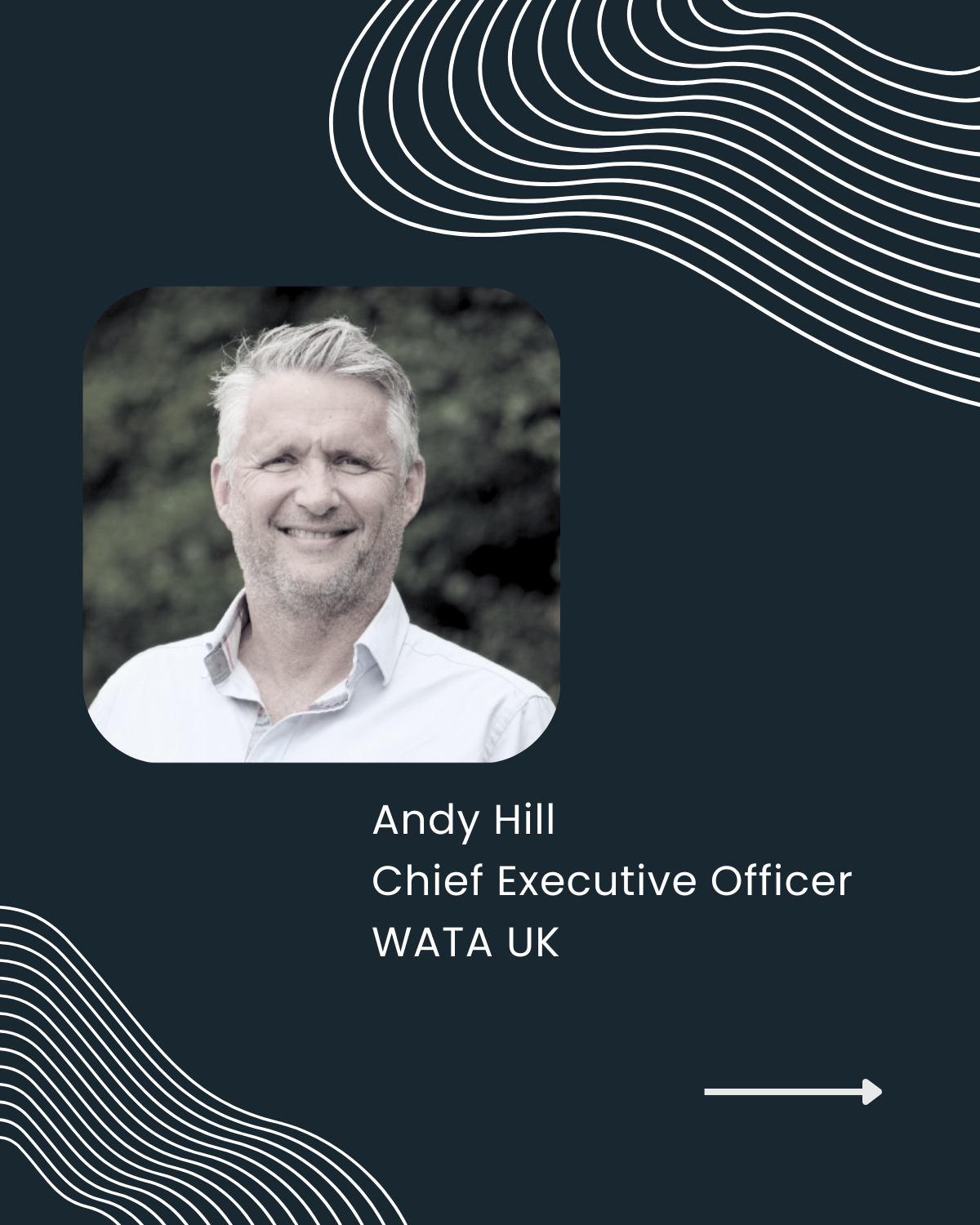
WATA’s stated mission is to promote washed and recycled aggregates to government and the wider market. What motivated you to lead that advocacy and how do you define WATA’s core purpose?
The bulk of my career in the recycling sector has been in alternative fuels. However, I have a passion for networking, working collaboratively for the end cause, and working with Government to get changes made.
In addition, I previously chaired the Wood Recyclers’ Association for nine years and am currently Chair of the Stove Industry Association. So when my long-term friend and business partner Gavin Griffiths approached me to ask if I would help to set up a trade association for the washed recycled aggregates sector, I was more than happy too. WATA has now been operating for just over 12 months.
The need for WATA came about primarily to look at the issue of “filter cake”, which we are now referring to as Fine Aggregate Material, the residue from washing aggregates. We need to work alongside the regulators to find a common-sense end use for this material because at the moment there is an inconsistency around the country in how and where it can be used. We believe it is a valuable resource if produced and used correctly.
We have a number of other goals too including general promotion of the washed aggregates sector and to raise standards within the sector.
Recyclers who operate wash plants can often face prejudice compared to those promoting virgin materials. But the fact of the matter is there is a finite amount of virgin material available and as a nation we need to come more on board with recycled materials across all sectors. Washed aggregates are of equal quality to virgin material, with the added benefit of reducing waste being sent to landfill, so it’s a win win.
As Government investment flows into green infrastructure to meet netzero targets, how do you see washed and recycled aggregates fitting into that agenda over the next 5 years and what would success look like for WATA and it’s members by that time?
We believe washed aggregates have a key role to play in helping the UK achieve its Net Zero goals and for us, success will be when washed aggregates are recognised for the value they bring to the UK’s construction sector.
We met with MPs at Westminster last November and as part of that we were asking Government to mandate a minimum requirement of 35% of washed recycled aggregates to be used in all publicly-funded infrastructure projects. This would reduce reliance on primary extraction, cut carbon emissions and demonstrate the Government’s commitment to building a circular economy in practice, not just policy.
This is a message we will continue to hammer home as we enter our second year. In five years time, I would hope that we will have succeeded in our call for a minimum requirement of washed recycled aggregates to be mandatory in publicly-funded projects. I would also like to think as a sector, washed recycled aggregates will have grown and as a trade association we will be representing 90% or more of the sector.
Currently only around 30% of washed recycled aggregates are used in UK construction. What are the main technical, commercial and behavioural barriers preventing wider uptake and what changes would most rapidly increase that percentage?
There are no technical barriers preventing a wider uptake because washed recycled aggregates meet all the specifications set by the construction industry. I think the main barrier to washed aggregates being used more widely can often be linked to lack of understanding and cost.
Virgin aggregates are often sold cheaply and washed aggregates can’t always compete with that because of the highly sophisticated cleaning process that has been gone through to clean them.
Recycled aggregates can also be seen as more cost effective for buyers, who like the fact they are recycled, but they come with the risk of contamination, including plastics and metals so it’s bad for the environment and a false economy.
We need to be educating the construction sector as to the overall benefits of washed recycled aggregates, which include the fact they are equivalent to virgin aggregates, they generate CO2 savings, they reduce the reliance on virgin aggregates and they are a true fit for the Circular Economy.
Alongside this we need to be asking the Government for support in mandating their use to further understanding and implement a change in behaviour.
WATA represents a wide range of members, from operators to equipment suppliers. How do you balance these diverse interests while maintaining a strong, unified industry voice?
Ultimately the success of WATA benefits all of our members regardless of the nature of their business. They all need a strong sector in order to succeed in their businesses and we are here to help that happen.
As part of our service offer we try to ensure that each member gets what they need from us and this is something we will be expanding on in 2026 now that we have more resource available to us.
Our core membership are wash plant operators for recycled aggregates and their needs very much lie with us having a voice that can be heard by regulators and Government.
We have had a very successful 12 months on that front already and have plans to increase that over the coming months both on the filter cake issue and on raising the profile of the sector and its benefits to the UK amongst MPs and Ministers.
In addition, we currently hold three member meetings a year and this year we are looking at ways we can make those networking opportunities more effective for our service members – the companies who supply into the sector.
You’ve led major organisations and now head a national trade body. What does effective leadership look like in a mission-driven industry like this and what drives you personally in this role?
Effective leadership in my opinion is straight forward in terms of having a clear plan and executing it with honesty and integrity, which in turn builds trust. Reputation is everything!
For me personally, what drives my role is the opportunity to make a meaningful difference at a national level. Trade bodies like WATA have a unique position: we sit between industry, policymakers and the public, and we have the ability to influence outcomes that shape the future of our sector.
That responsibility is motivating. I’m driven by the challenge of helping members navigate change, championing best practice and ensuring the industry’s voice is heard clearly, credibly and constructively at a time when leadership, evidence and collaboration matter more than ever.
In a world of rapid technological and environmental change, what skills and leadership qualities will define the next generation of industry leaders?
I believe the next generation of industry leaders will be defined less by technical expertise and more by their ability to think systemically, lead collaboratively and act with long-term purpose.
Strategic agility will be essential. The capacity to interpret complex data, respond to regulatory and market change, and make informed decisions in uncertain conditions is already increasing and I think it will continue to do so.
Equally important will be strong values-based leadership. Future leaders must balance commercial performance with environmental responsibility, recognising that sustainability, resilience and resource efficiency are no longer optional extras but core business fundamentals. This requires confidence, transparency and the ability to engage constructively with regulators, supply chains and communities.
Finally, the leaders who will succeed are those who invest in people: developing skills, encouraging innovation and fostering cultures where expertise is shared rather than siloed. In a changing world, leadership is no longer about having all the answers. It is about asking the right questions, listening carefully and guiding organisation’s forward with clarity and integrity.