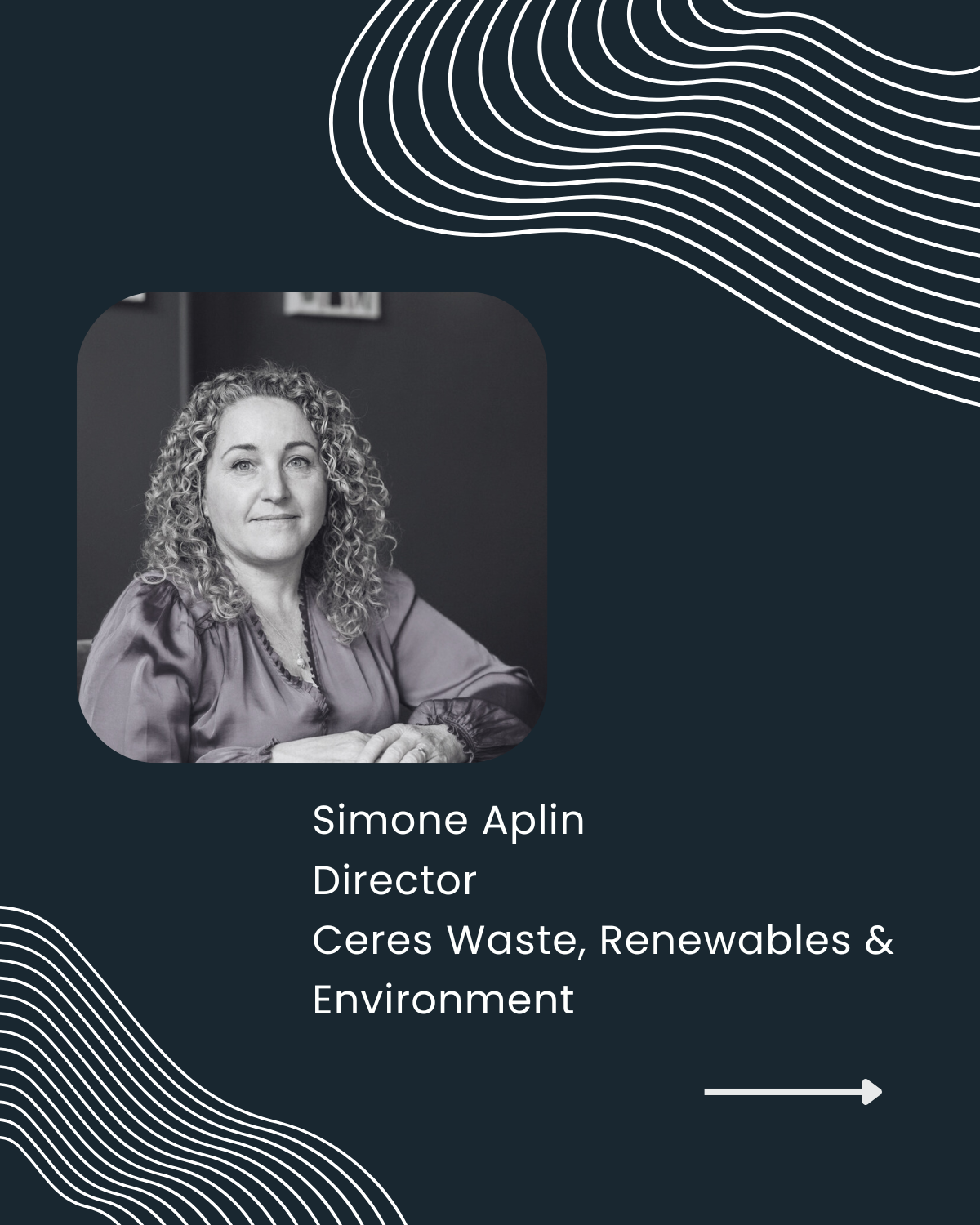
Consultancy can be an unknown or misunderstood space to many. How would you describe the appeal of this work, and what keeps you passionate about it after years in the sector?
‘Consultant’ is such a bland title. It doesn’t describe what we do, and I have a hard time explaining what I do to my friends and family who think my job involves shouting at people for putting the wrong thing in recycling bins. People sometimes think that I must be a doctor which is terrifying!
In reality, consultants are experts in specific topics and clients can hire in their knowledge, experience and skills to advise on specific projects or issues. It’s an effective and cost-efficient way to deliver projects and find solutions. In some cases, clients see it as beneficial to have an independent view on issues.
I have been a consultant for about 15 years, having previously worked in the waste industry and then for the Environment Agency. At first, I worried that the knowledge I brought to the role would become obsolete as the industry and legislation moved on but that couldn’t have been further from the truth. As a consultant, I am lucky in that I stay at the leading edge of the industry and have the opportunity to deeply immerse myself in a wide range of topics that can vary wildly between projects. Often, the issues we are working on are at the forefront of new waste and recycling technologies, policy development and sustainability. Every project is different and in one week I can move between a meeting in very upmarket London offices to visiting an illegal waste site as part of my role as an expert witness.
The constant variety of people, projects and clients is what keeps me in consultancy. If you have a curious mind and enjoy the human connections you make along the way, consultancy is a fantastic job, and one that you can jump into at any stage of your career.
In a rapidly evolving sustainability landscape, how do you define the unique value that a specialist consultancy like Ceres Waste, Renewables & Environment brings compared to in-house sustainability teams or generalist advisors?
Ceres Waste, Renewables and Environment grew to be 4 Directors in March 2024, all of whom have deep subject-matter expertise and a long track record of consulting. We believe that we offer something quite different from other, larger consultancies in that clients get exclusive senior level support (we don’t delegate work to less experienced staff), across a wide range of issues and delivered through a very client focused approach. In short, clients can bring us in to work alongside them or to deliver specific projects and know that they will receive high quality and insightful support, when they need it and at a cost-effective price. One of our clients made us realise the value of our service in feedback when he wrote, “Ceres has the sweet spot of the personal touch a smaller team brings, backed up with a depth of knowledge that you expect from a big consultancy”.
Clients in waste, resources and renewables operate in complex regulatory and technological environments. How does Ceres ensure its advice is both strategically robust and practically implementable?
It is a period of significant change in the sector at the moment with the implementation of key environmental policies such as Extended Producer Responsibility for packaging (ERP) and Simpler Recycling. More changes will come with deposit return schemes and the proposed extension of the UK Emissions Trading Scheme to Energy from Waste (EfW). All this regulatory change comes at a time when a range of new technologies are also being developed and deployed. These ‘waste to X’ technologies break down a range of feedstocks to molecules that can be reformed into recycled polymers, gasses and fuels, including biomethane, hydrogen and ‘Sustatainable Aviation Fuel’. In addition, carbon capture and storage (CCS) could make some EfWs ‘carbon positive’ if biogenic carbon emissions can be captured.
Our in-house knowledge, networks and project experience means that we can stay at the forefront of these changes and we are regularly asked to create insight reports for publication. This year, we wrote one on the systemic impact of ETS on the sector for CWM and another on strategic approaches to minimising ETS costs for Suez recycling and recovery UK
We help our clients to understand the waste market in the UK and internationally and how these changes are likely to impact waste flows, composition, policy and gate fees etc. Your’re right to say that it’s complex. A lot of our work is for project developers and investors looking for the long term clarity they need to release investment in the infrastructure required manage resources and reduce carbon emissions. We use this expertise to help them develop evidenced strategies and business cases, and can offer practical help with issues such as feedstock or recycled material procurement, regulation and compliance (including end of waste) and, for projects or contracts that are in dispute, we are able to provide proven expert witness services.
The sustainability sector remains predominantly male-dominated at senior levels. As a female leader, what unique perspectives do you bring to your role and how do you believe gender diversity strengthens sustainability leadership?
I find it hard to see myself as a ‘leader’ and perhaps that is a particularly female trait!
You’re right to highlight that employment in the sector is skewed towards white males. Results of an analysis by ADR UK, published in March this year found that more than two thirds of green jobs were filled by men, and they were paid more than 10% than women in equivalent roles. At Ceres, men and women are paid equally, something we are proud off.
It’s often harder for women to take more demanding roles due to the domestic commitments they are juggling. The same is true of their ability to take risks. Personally, I know that I would not have had the career I have without the support of my parents when my daughter was young. That allowed me to take my first consulting job 50 miles away in Bristol and ultimately got me to where I am now.
I don’t want to repeat any tropes about how female leaders can be more authentic, emotionally intelligent and nurture successful teams. To be honest, some of those sound like backhanded compliments at times and I know plenty of men that would fit that description just as well. I do know that we are just over 50% of the UK population though and just as capable as men. Simple as that.
Reflecting on your journey as a leader in environmental/sustainability consultancy, what lessons have been most transformative for you, and what advice would you give to emerging leaders looking to make an impact in the sector?
The biggest lesson that I have learned, and that I try to convey to those at the start of their career or moving into a leadership role, is the power of networks. The term ‘network’ can sound cold and daunting, almost like you are expected to market yourself to faceless others to win their ‘business card’ but what I mean is the natural development of mutually valued relationships and friendships.
I have met fantastic people working in this sector and I think that’s strengthened by the fact that we’re all working towards the same goal – a circular approach to the use of materials and a low carbon future. It needs a lot of minds and dedication to get there and there’s room for all sorts of skills and personalities. Others will actively support you build your business and make your contribution.
Having a wide network helps you to understand issues from the perspective of others which is invaluable when building your position. I have been lucky enough to have made some fantastic relationships over my career with people I now consider to be friends. They have given me advice, opportunities, insights to their work, and confidence that I had something valuable to contribute to the sector. I appreciate it greatly and enjoy being a ‘connector’, putting people together for their mutual benefit.
The support I have received from my network has also been instrumental in having the confidence to co-create Ceres Waste, Renewables, & Environment which has truly been transformational for me. I am naturally driven to work hard and deliver for clients but having control over the work we do and the direction we take has allowed us to focus completely on delivering cost efficient, high-impact support. I can get more closely involved, immerse myself in the detail and respond quickly to client needs. It’s very fulfilling, combining purpose, knowledge, and the freedom to truly make a difference.
With so many challenges still ahead, what gives you the most hope for the future of sustainability and the role consultancy can play in driving lasting change?
Despite the worrying political rhetoric trying to undermine the importance of sustainability and Net Zero, many of the key principles like reducing waste and the long-term security of raw materials are fundamental to business. Added to this, consumers are increasingly holding brands and manufacturers to account for the environmental impact of the products they place on the market and are on the alert for fraudulent or misleading green claims. Reducing the carbon impact of our economic activity is vital to being able to sustain them in a world increasingly impacted by climate change.
As Consultants, we have a role to play in supporting society to overcome these challenges. Depending on your specialism, this could include influencing behaviour, designing effective recycling systems, supporting innovative new technology, delivering infrastructure for circular materials, influencing policy design and many more.
If you want a job with purpose, have a curious mind and enjoy creating lasting client relationships, Consultancy is a great option at any point in your career.