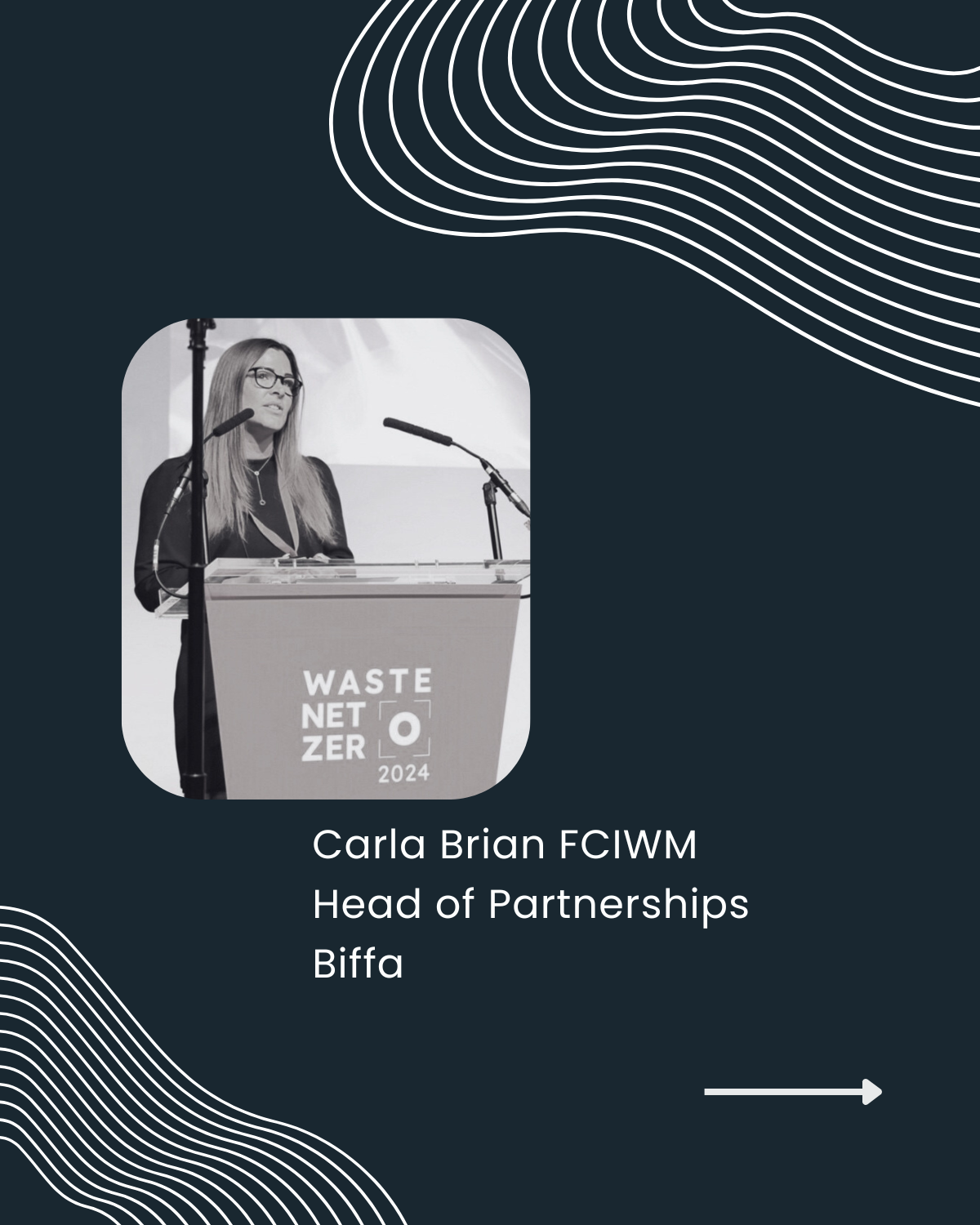
In your role as Head of Partnerships at Biffa, how do you identify and nurture partnerships that deliver both business growth and meaningful environmental impact?
In my role at Biffa, I focus on building partnerships that deliver both commercial value and positive environmental outcomes. It starts with identifying where strategic alignment exists – whether with customers, suppliers, or industry bodies – and finding shared goals around circularity, decarbonisation, or resource efficiency.
Once those objectives are clear, it’s about building trust and transparency, so the partnership becomes a genuine collaboration rather than a transactional arrangement. That often means bringing different parts of the business together with our partners early : operations, commercial, policy, and sustainability teams to co-design solutions that actually work in practice.
We also take a long-term view. Some of our most successful partnerships have evolved over several years as regulation and market dynamics have shifted. By staying close to policy developments like EPR and DRS, we can help partners adapt, innovate, and capture opportunities as the sector moves towards a more circular economy. The goal is to create partnerships that accelerate progress on net zero and resource efficiency, while also supporting Biffa’s growth and leadership in sustainable waste management
What has been one of the biggest challenges you’ve faced in your career building partnerships for sustainability and what lesson would you pass on to emerging leaders?
One of the biggest challenges I’ve faced in building partnerships for sustainability is balancing ambition with practical delivery. Everyone wants to do the right thing to innovate, decarbonise, or move towards circularity but meaningful change takes time, investment, and often shifts in how organisations operate.
A key lesson I’ve learned is to meet partners where they are. Collaboration isn’t about pushing a single agenda, it’s about understanding different drivers, whether commercial pressures, operational realities, or regulatory uncertainty, and finding common ground to move everyone forward.
I’ve also learned that progress rarely comes from big statements, but from consistent, transparent actions. Building trust takes time, and transforming systems like packaging recovery or recycling infrastructure is no different. But if you stay focused on the long-term goal, are honest about the challenges, and bring people with you, the results are far more resilient and impactful.
For emerging leaders, I’d say: stay curious, be patient, and lead with integrity. The strongest sustainability partnerships are grounded in shared purpose and built through collaboration, not competition.
How are you nurturing leadership capability across your organisation, whilst attracting high performing professionals from other sectors to build resilience for the future?
Internally, a big focus for us is on developing leadership capability through visibility, empowerment and cross-functional collaboration. We really encourage our people to take ownership of projects that stretch their skills, whether that’s getting involved in new policy areas like EPR and DRS, or leading partnerships that cut across traditional business boundaries. We’re quite intentional about creating space for emerging leaders to contribute to strategic conversations early on, because that’s how confidence and capability grow.
At the same time, we’re attracting high-performing professionals from other sectors — from logistics, retail, and manufacturing, for example — who bring fresh perspectives and new ways of thinking. Sustainability and circularity are challenges that cut across industries, so that mix of experience is hugely valuable.
We’re also doing a lot to make the industry more visible and appealing. Programmes like Women in Waste, and our engagement with universities, trade associations, and policy forums, are helping to position Biffa and the wider sector – as somewhere people can genuinely make a difference.
For me it’s about creating a culture that values learning, collaboration, and purpose. If you can get that right, you naturally attract and retain the kind of leaders who will drive the next phase of the circular economy.
You’ve spoken about the importance of diversity in the waste industry. What practical changes has Biffa made to attract and retain talent, particularly women, in key leadership roles?
For me, diversity in our industry isn’t just a nice to have – it’s absolutely essential. It drives better decisions, innovation, and long-term sustainability. The waste and resources sector has historically been quite male-dominated, but that’s changing and at Biffa we’ve been very intentional about making that shift real and visible.
Practically, we’ve focused on creating pathways where women can progress and thrive. That includes targeted leadership development, mentoring, and making sure talented women have the visibility, confidence, and support to step into senior roles.
We’ve also looked hard at our recruitment practices – from how we write job descriptions to how we structure interview panels – to make sure we’re attracting a more diverse pool of candidates. And we’re celebrating success stories across the business because representation really does matter.
Through initiatives like Women in Waste, we’ve built a really strong internal community that connects colleagues, provides role models, and helps challenge perceptions of the sector.
Ultimately, diversity and inclusion aren’t side projects for us they’re embedded in how we think about leadership and culture. When people feel valued and can bring their full selves to work, that’s when you get the best ideas and the strongest teams.
How do you balance being a strategic leader with the need to stay hands-on in execution, especially in such a fast-moving sector?
It’s definitely a balance – particularly in a sector as fast-moving as waste and resources. For me, it really comes down to prioritisation and clarity of focus. At a strategic level, my role is about setting direction, identifying opportunities, and making sure the business is aligned around our long-term goals — things like EPR, DRS, and the broader transition to a circular economy.
But staying hands-on is just as important. I spend a lot of time with teams on the ground, working through operational challenges or engaging with partners to co-design solutions. It keeps decisions grounded in reality and helps maintain credibility across the business.
I’m also lucky to have strong, empowered teams. Trusting people to take ownership and giving them the space to innovate means I can stay focused on the bigger picture without losing touch with what’s happening day to day. Regular site visits and open conversations help me stay connected and informed.
It’s about finding that balance between vision and delivery – setting the direction, supporting teams, and rolling up your sleeves when needed to make sure strategy actually translates into impact.
With the implementation of the Simpler Recycling regulations for businesses, what challenges has Biffa encountered in ensuring compliance and how is the company supporting clients to meet these new requirements?
With the rollout of the Simpler Recycling regulations, one of the main challenges has been ensuring that both our operations and our clients are fully aligned with the new requirements neither of us had a large lead time (approx. 4 months ) . For businesses, it’s often about understanding the nuances of what they need to do differently and why, from segregating materials correctly to updating internal processes. On our side, we’ve had to make sure our collection, sorting, and reporting systems can support those changes effectively. Ordering of new containers , trucks and staff.
To support our clients, we take a proactive approach. That includes providing guidance, training, and tools to help them implement compliant recycling practices. We also work closely with them to identify any gaps and create practical solutions, so compliance isn’t just a box-ticking exercise but actually helps them improve efficiency and sustainability outcomes.
Ultimately, it’s about partnership – helping clients navigate regulatory changes while ensuring that, as a business, we continue to drive consistency, transparency, and progress toward a more circular economy
If there were no barriers (regulatory, technical or financial) what’s one partnership you would pursue tomorrow to radically change the waste industry?
Great question ……. If there were no barriers, I’d create a cross-sector partnership across manufacturers / producers, retailers, waste operators, and recyclers to build a fully circular system for all key materials —electronics, plastics, metals, C&D material, packaging and more. Everything would be designed from the outset for reuse, repair, or recovery, tracked through collection and processing, and returned as high-quality resources to the market.
The result? Reduced environmental impact, standardised quality across materials, and a system that’s economically and environmentally sustainable. Too often the pieces of the chain work in isolation — bring them all together, and you could transform the entire industry almost overnight.
What advice would you give to leaders looking to build high-impact partnerships in sustainability-focused industries?
I think the key is starting with shared values and a genuine alignment on what you’re trying to achieve – not just commercially, but in terms of long-term impact. The partnerships that really work are the ones where everyone’s clear on the bigger goal and there’s trust and transparency from the outset.It’s also about focusing on impact rather than ownership. In sustainability, no one organisation can do it all, so you’ve got to be willing to collaborate, share ideas and data, and let each partner play to their strengths.
And finally, I’d say be pragmatic. It’s great to be ambitious, but the best partnerships are the ones that can actually deliver measurable results – whether that’s reducing waste, cutting carbon, or creating social value.