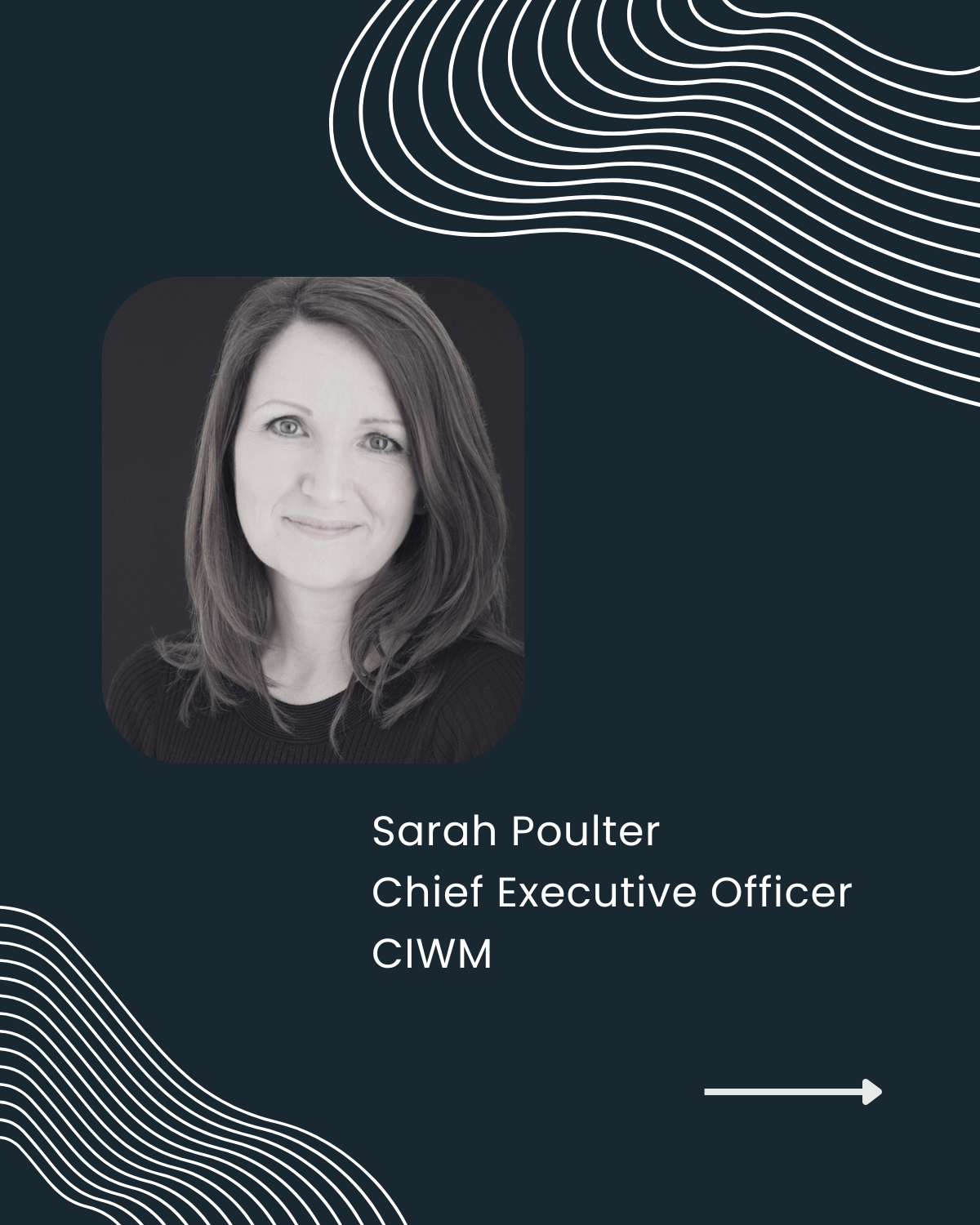
You’ve steered CIWM through significant strategic transformation, expanding its reach and influence. What leadership principles have you relied on most to guide this evolution and how have they shaped your decisions?
When I stepped into the CEO role at CIWM, I knew we were at a pivotal moment. We faced financial and cultural challenges and the sector was changing fast, as were the expectations of our community. Leading through that required humility, curiosity, and courage.
I started by asking big questions: What do our members and learners need now, and what will they need in five years? How do we stay relevant and resilient? To answer them, I sought perspectives beyond my own experience, through professional networks, coaching, and structured strategic support, and we embedded a culture of learning across the leadership team. We also adopted an outcomes-focused approach, introduced a more flexible working model to motivate and empower our people, and established a core set of values that underpin everything we do.
These principles have guided CIWM from being a UK-centric professional body to a global network of members in over 100 countries, strengthened our diversity and inclusion efforts, and driven our digital transformation to reimagine how we engage and deliver value.
For me, leadership is about impact – the team you inspire, the culture you shape, and the legacy you create. Leading with humility, curiosity, and courage has allowed us to transform CIWM, expand our reach, and build a resilient, thriving organisation that’s ready for the future.
CIWM’s core purpose, “moving the world beyond waste”, is both ambitious and vital. How do you balance long-term industry vision with the urgent pressures facing waste and resource professionals today?
The simple answer is to listen and give voice to our members and partners wherever possible. Our membership consists of people with deep knowledge, skills and expertise from right across the sector and an always impressive proportion of them like to volunteer and actively support CIWM.
By tapping into that expertise, through our forums, regions, committees and specialist groups, we can help shape our sector’s long-term vision, policies and practice, as well as responding to those day-to-day pressures facing professionals and practitioners.
You’ve championed digital innovation and member experience enhancements at CIWM. How do you see digital transformation altering professional engagement and sector capability over the coming years?
It’s not just the coming years, it’s the here and now. Not a day goes by without a discussion, email or message about the power of AI, opportunities to tap into social media, or ways of leveraging technology to help our own internal ways of working, better sector services or improve member experience.
We’ve been careful to focus on those opportunities that offer tangible, demonstrable and affordable improvement to specific issues and with clear output benefits, and of course to listen and learn from our members and networks.
Simple tech that we all use day-to-day has offered new opportunities to extend reach and connectivity with members that we could only have dreamed of ten years ago. In terms of the tech’ adoption curve, we must avoid the risk of being laggards or late adopters and should probably aim to be early majority – or even early adopters – where we can.
Equality, Diversity & Inclusion has been a clear priority under your leadership. What practical steps has CIWM taken to embed EDI across the organisation and influence the wider waste and resources sector?
Like many industries, the resources and waste sector faces ongoing challenges in becoming a truly accessible, diverse and inclusive place to work. This is especially important if our sector wants to attract the best talent and skills as we continue the transition towards higher recycling, resource efficiency and a more circular economy.
In 2022, informed by dedicated research, we took a significant step forward by developing an Equality, Diversity and Inclusion Strategy. This sets out a clear vision for a more inclusive organisation and sector, along with the priority areas where we believe we can have the greatest impact.
Since then, we have established a Sector Inclusion Forum, bringing together CIWM members and volunteers to support the delivery of our strategy. We have set up an Early Careers Team to amplify the voices of those who are at the beginning of their careers, raised awareness and shifted mindsets by delivering Equality, Diversity and Inclusion training to all staff, reviewed and strengthened our recruitment processes and working practices to accommodate different lifestyles and approaches, and made tangible progress in ensuring our events are accessible and inclusive, with more diverse representation across our programmes.
While there is still much more to do, we remain fully committed to advocating for and embedding good EDI practice, both within CIWM and across the wider sector.
Talent and future workforce development are key challenges for the industry. What initiatives are you most proud of in nurturing the next generation of sector leaders?
CIWM is deeply committed to supporting future workforce development. We do extensive work to champion the critical green skills required for a sustainable future and to attract new talent to the resources and waste sector by positioning it as an exciting and rewarding career destination.
One initiative I am particularly proud of is our Early Careers Team, established in 2024. Led by CIWM’s first Early Careers President, this group of ambassadors ensures our work is informed by the perspectives of those in the early stages of their careers and raises CIWM’s profile among the next generation of sector leaders.
Most importantly, this initiative creates meaningful learning opportunities for our ambassadors. By giving them a seat at the table in our boardroom and on key projects, they gain first-hand experience of how strategy is shaped and decisions are made at the highest level. Through reverse mentoring with our Trustees, building new relationships, and representing CIWM on panels and at events across the industry, they are developing essential leadership skills and enhancing their professional profiles for the future.
It is incredibly rewarding to see them grow and develop through this programme, and their energy and enthusiasm is felt across the whole organisation.
Collaboration across sectors is increasingly important for circularity. How can cross-sector partnerships unlock innovation and systemic change?
Our sector, working closely with Government, is hopefully about to demonstrate that. Early in 2026, we are expecting the publication of the Circular Economy Growth Plan and the first batch of Circular Economy Sector Roadmaps. These will be the result of an extraordinarily collaborative and cross-sector approach by Government, our sector and others via its Circular Economy Task Force.
CIWM and its members have been integral to this approach, and we look forward to seeing the innovative and systemic change that the Growth Plan and Roadmaps should help to drive for the UK economy over the years ahead.
In light of recent debates on waste crime and industry regulation, what role should professional bodies like CIWM play in shaping public policy and elevating sector standards?
Professional bodies must position themselves at the heart of policymaking and driving for higher standards across their sectors wherever possible. At CIWM, we have reset our Policy and Innovation Forum, refreshed our Specialist Expert Groups and work closely with our learning and development partners and wider volunteering communities to help to ensure relevance, impact and influence with governments, regulators and sector stakeholders.
By empowering members and tapping into their collective expertise, professional bodies can support political and regulatory stakeholders in addressing key sector challenges. In our case, waste crime is one of the major issues negatively impacting the responsible resources and waste sector. It costs the UK over £1 billion each year in lost revenue and clean-up costs, causes misery and anxiety to communities, and damages local environments and economies. We are determined to identify, support and facilitate practical solutions, and to work with partners to disrupt and tackle waste crime at every opportunity.
Reflecting on your recognition as CEO of the Year and inclusion in influential leadership lists, what advice would you give to emerging leaders in the sustainability and resource management field?
It was a great honour to receive the MemCom CEO Leadership Award, and preparing for my subsequent MemCom CEO Lecture offered a valuable opportunity to pause and reflect on my leadership journey to date.
As CEO of an organisation committed to championing professionalism, I have a deep appreciation for the impact of continuous professional development and the value of strong professional networks. Early in my role, for example, I joined a CEO network called Vistage, which connected me with leaders from a wide range of sectors, as well as an experienced executive coach. The insight and support I have gained through this network have helped me navigate some of CIWM’s most significant challenges and reinforced my belief in the power of peer-to-peer learning.
For emerging leaders, my advice would be to seek out professional networks and invest time in building trusted support around you. None of us can know or do it all alone, and that support can be truly transformative, both personally and professionally.